Blog

Ruby Wang
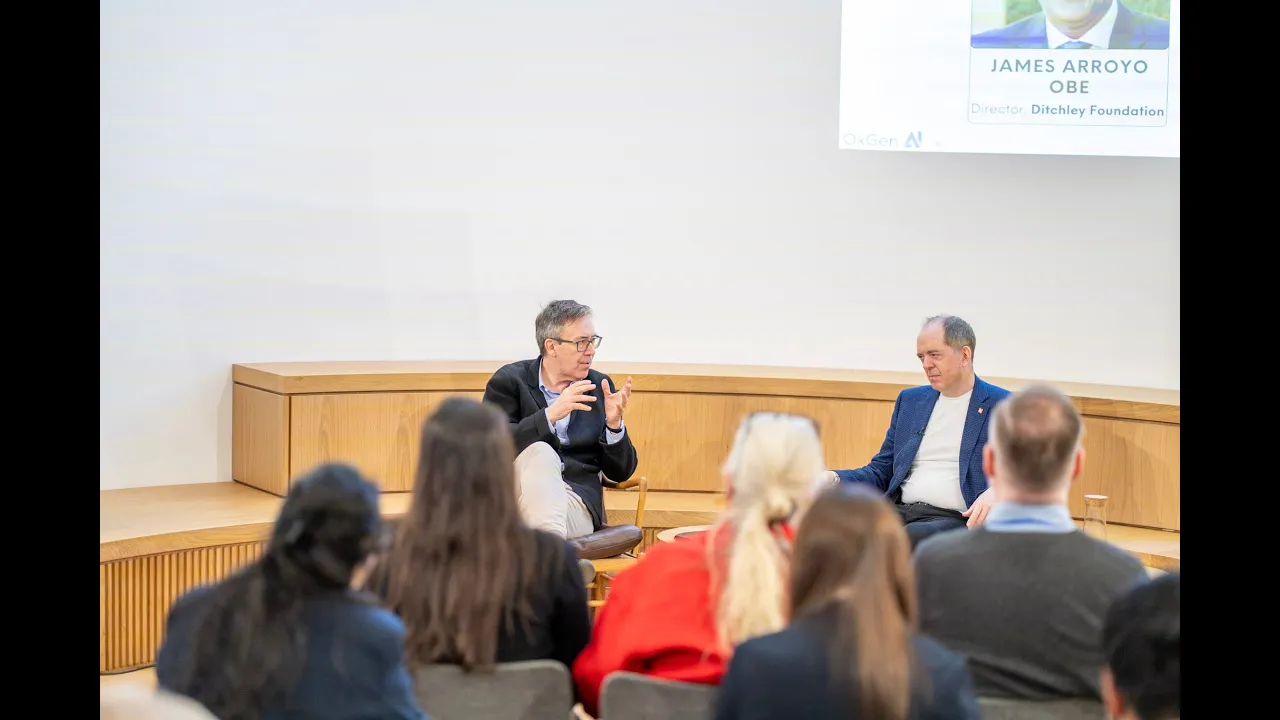
AI systems are becoming increasingly lifelike - more conversational, emotionally fluent, and capable of human-style interaction. But this evolution raises a core question in ethical product design:
Should AI systems lean into human-like behaviour, or make it unmistakably clear that they are not human at all?
At the 2025 Oxford Generative AI Summit (OxGen25), our Founder and CEO, William Tunstall-Pedoe FREng, also the founder of Evi, the technology behind Amazon Alexa, joined a timely fireside chat to explore this design dilemma.
The Tension sitting at the heart of AI design
As AI is deployed across customer service, healthcare, finance, and insurance, the debate is shifting from excitement to ethics and safety:
• Do human-like agents increase trust or create emotional dependency?
• Should UX design prioritise comfort and rapport, or transparency and clear boundaries?
• What happens when users can’t easily tell the difference?
These are pressing product questions for today’s AI development, not distant hypotheticals.
The Industry’s bottleneck: Trust
For companies building next-generation AI agents, the key question is no longer “Can we make AI feel human?” William identified the real barrier to adoption in high-stakes environments: hallucinations, black-box models, and unpredictable behaviour.
Beyond human-likeness, we must be able to trust the AI systems.
UnlikelyAI’s approach: Be trustworthy, not just humanlike
At UnlikelyAI, we believe the future of AI lies in building systems that can be verified and trusted. Our neurosymbolic approach combines neural networks with symbolic logic. This allows us to deliver:
• Explainability
• Accuracy
• Consistency
Neural components handle language understanding, while symbolic logic applies rules, checks for exceptions, and produces clear justifications. It’s how we create enterprise-ready systems designed for dependability.